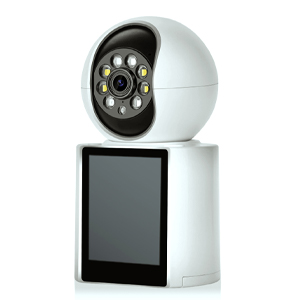
AOV (Area of View) cameras represent a significant technological innovation in the field of security surveillance in recent years. By optimizing lens design and image processing algorithms, they achieve broader and more flexible monitoring coverage compared to traditional cameras. Unlike fixed-view cameras, AOV cameras can dynamically adjust their monitoring angle and range based on actual needs, delivering a "multi-functional" surveillance solution.
From a technical perspective, AOV cameras achieve their unique capabilities through the following methods:
High-precision motor-driven zoom lens systems
Multi-lens stitching technology
Advanced image correction algorithms
Intelligent scene analysis capabilities
Traditional cameras typically cover a 60-90-degree field of view, whereas high-end AOV cameras can achieve 180-degree or even 360-degree panoramic monitoring. A single device can cover areas that would otherwise require multiple traditional cameras.
AOV cameras support remote control of viewing angles, allowing operators to change the focus area as needed without physically adjusting the camera's position. This flexibility is particularly valuable for large-scale surveillance.
Combined with AI algorithms, AOV cameras can automatically detect unusual activity within the monitored area and intelligently adjust focus and angle to track key areas, achieving dual functionality of "panoramic monitoring + detailed capture."
Since a single AOV camera can replace multiple traditional cameras, it significantly reduces equipment procurement, installation wiring, and long-term maintenance efforts. Industry statistics show that, for the same coverage area, AOV systems can lower total ownership costs by approximately 30%.
AOV cameras utilize advanced image sensors and optical systems, combined with intelligent noise reduction and HDR technologies, to deliver clearer and more stable surveillance footage under various lighting conditions.
In open urban areas such as city squares and transportation hubs, AOV cameras enable seamless, gap-free monitoring while using intelligent analytics to detect anomalies like crowd gatherings or traffic violations.
Shopping malls, airports, and similar venues use AOV technology to monitor overall foot traffic while also zooming in on specific counters or passageways when needed.
In factories and warehouses, AOV systems can oversee large areas while simultaneously tracking the operational status of critical equipment, enhancing workplace safety.
Installing AOV cameras at community entrances and public activity areas allows comprehensive monitoring while minimizing privacy concerns associated with excessive camera deployment.
Despite their advantages, AOV cameras still face several technical challenges:
Image distortion at the edges due to ultra-wide angles
Reduced panoramic image quality in low-light conditions
High-resolution video storage and transmission demands
Future developments in AOV technology may include:
Deeper Integration with AI: More precise behavior recognition and auto-tracking features
Multi-Spectral Integration: Combining thermal imaging and low-light enhancement for 24/7 monitoring
Edge Computing Applications: Localized intelligent analysis to reduce bandwidth requirements
Privacy-Centric Design: Smart blurring and other technologies to balance security and privacy
AOV cameras represent the evolution of security surveillance toward smarter and more efficient solutions. As the technology matures and costs continue to decline, AOV systems are expected to become mainstream in mid-to-high-end security surveillance within the next 3-5 years. For businesses and organizations, evaluating the potential of AOV technology now will provide a competitive edge in future security system upgrades.
For users considering AOV deployment, it is recommended to assess products based on actual needs, focusing on image quality, intelligent analytics, and system compatibility. Additionally, choosing vendors with strong technical support and after-sales service ensures long-term system stability and performance.
Copyright © 2023 INSEETECH LIMITED. All Rights Reserved.