In the relentless march of technological progress, two giants are emerging to define the next era of wireless connectivity: 5G and WiFi 6. You've likely heard the buzzwords, but what do they truly mean for you? More importantly, when it comes to critical applications like modern security cameras, which one should you trust?
This isn't just a battle of speed; it's about choosing the right tool for the right job. Let's demystify these technologies and crown a champion for your specific needs.
Before we pit them against each other, let's establish what we're dealing with.
WiFi 6 (802.11ax): This is the latest generation of local area network (WLAN) technology. It's the evolution of the WiFi you use at home and in the office. Think of it as a massive upgrade to your internal network—faster, more efficient, and designed to handle dozens of devices simultaneously from your smart bulbs to your laptops, all within a limited area like your house.
5G: This is the next generation of wide area network (WWAN) technology for cellular networks. It's the successor to 4G LTE on your smartphone. 5G is designed to provide high-speed internet on the go, covering entire cities and countries, connecting your device to the wider world.
In essence, WiFi 6 is about revolutionizing your home network, while 5G is about revolutionizing your mobile network.
| Feature | WiFi 6 | 5G |
|---|---|---|
| Network Type | Local Area Network (LAN) | Wide Area Network (WAN) |
| Primary Use Case | Indoor connectivity, smart homes, offices | Mobile connectivity, on-the-go internet |
| Coverage Range | Limited (a single home/building) | Extensive (cities, countries) |
| Infrastructure | User-owned router & equipment | Carrier-owned cell towers |
| Frequency Bands | 2.4 GHz, 5 GHz, (WiFi 6E: 6 GHz) | Low-Band (wide coverage), Mid-Band (balance), High-Band/mmWave (ultra-fast, short range) |
| Latency | Very Low (~1-2 ms in ideal conditions) | Ultra-Low (~1 ms in ideal conditions) |
| Speed | Very High (Theoretical: up to 9.6 Gbps) | Extremely High (Theoretical: up to 20 Gbps) |
| Device Connection | Excellent for high-density environments (many devices) | Designed for massive IoT networks (thousands of devices per tower) |
| Cost Model | One-time equipment cost + internet bill | Monthly data plan from a cellular provider |
This is the million-dollar question. The theoretical peak speed of 5G (especially high-band mmWave 5G) is indeed higher than that of WiFi 6. However, "theoretical" is the key word.
In the real world, your experience is dictated by several factors:
WiFi 6: Your speed is shared by everyone and everything on your local network. A wired fiber backhaul can make WiFi 6 blisteringly fast and consistent within your home. Congestion from neighbors can be an issue in dense apartments.
5G: Your speed depends on your distance from the cell tower, the number of users connected to it, and physical obstacles. While mmWave 5G can be mind-bogglingly fast, it has a very short range and struggles with walls.
Verdict: In a perfect, lab-based scenario, 5G can be faster. But in your living room, a well-set-up WiFi 6 network will often provide a more consistently high-speed and reliable experience.
They are not direct competitors but rather complementary technologies.
Choose WiFi 6 for:
The Smart Home: Connecting all your IoT devices, laptops, and TVs.
Fixed Locations: Offices, homes, and cafes.
High-Bandwidth, Low-Latency Applications: 4K/8K video streaming, VR gaming, and large file transfers over the local network.
Choose 5G for:
Mobile Broadband: High-speed internet on smartphones and tablets anywhere with coverage.
Rural Internet: Providing home internet where traditional broadband is unavailable (Fixed Wireless Access).
Mission-Critical Communications: Autonomous vehicles, remote surgery, and large-scale public event coverage.
This is where the debate gets practical for homeowners and business owners. Let's break it down.
Advantages of WiFi 6 for Security Cameras:
No Data Caps: Most home internet plans offer unlimited data, which is crucial for 24/7 streaming and high-quality video recording without worrying about overage fees.
Lower Operational Cost: After the initial router purchase, there are no recurring monthly fees specifically for camera connectivity (unlike a 5G data plan).
Local Network Control: With WiFi, you can often set up local network video recording (NVR) that keeps your footage entirely within your premises, enhancing privacy and security.
Ideal for Fixed Locations: Cameras are stationary. WiFi 6 provides a powerful, stable, and low-latency connection perfect for a fixed point.
 |
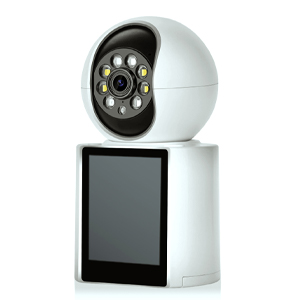
WIFI 6, 24/7 Recording, 9W Solar Panel, 10000 mAh Battery, Auto Tracking, 360° PTZ, and 10X Zoom for Home Security |
Advantages of 5G for Security Cameras:
True Portability and Flexibility: 5G cameras can be installed anywhere with a cellular signal, without needing to run Ethernet cables or be within range of a WiFi router. This is perfect for:
Construction sites
Temporary pop-up stores
Remote properties like barns or warehouses
Monitoring large outdoor areas where WiFi range is insufficient
Enhanced Reliability: A 5G camera isn't dependent on your home internet. If your home power or internet goes down, a 5G camera with a battery backup can continue to transmit alerts and footage, a significant security advantage.
Easy Installation: No need to extend your network; just insert a SIM card.
For the vast majority of homes and businesses, WiFi 6 is the superior and more cost-effective choice for security cameras. It provides unlimited, high-quality data transmission at a fixed cost, with excellent performance for multiple stationary cameras.
Reserve 5G connectivity for specialized, remote, or temporary monitoring needs where running a network cable is impossible or impractical. It's a fantastic solution for filling the coverage gaps that WiFi cannot reach.
The future isn't about one winning over the other. The most robust security and connectivity ecosystem will seamlessly integrate both: a powerful, reliable WiFi 6 network for your primary cameras and home devices, with 5G as a resilient backup or a specialized tool for unique challenges. Choose wisely based on your specific scenario, and you'll never be in the dark.
Copyright © 2023 INSEETECH LIMITED. All Rights Reserved.